Last updated 2026-08-21
TL;DR
A scopist edits a court reporter's CAT transcript so the finished record reads clean and consistent. You do not take down the live proceeding. You do not certify anything. Learn legal format, English, and one CAT program, then contract with reporters. There is no federal scopist license. Confirm reporter-board rules in the state of the proceeding, because those rules are real, not a myth you can skip.
What is a scopist?
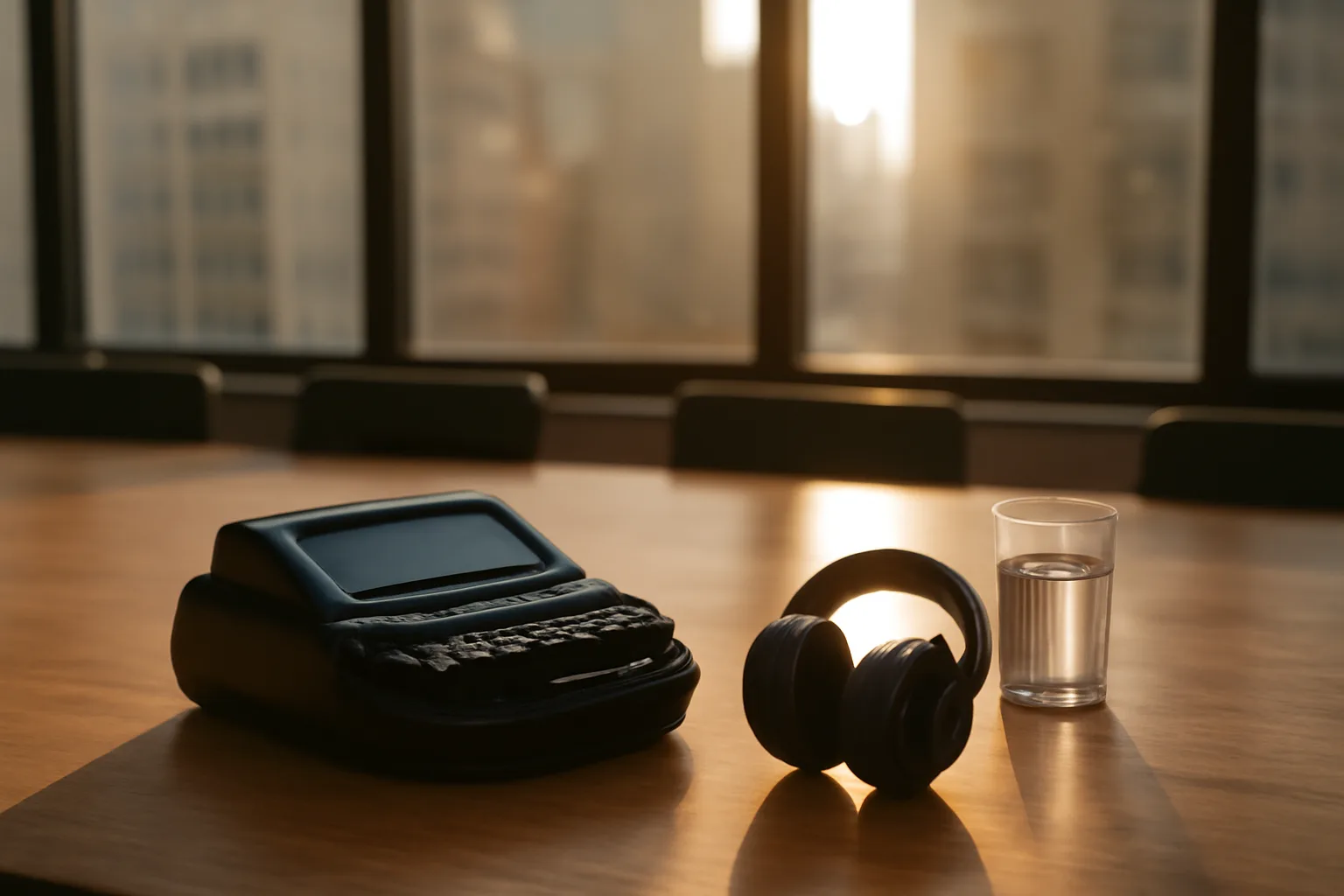
A scopist edits court transcripts. You take a court reporter's raw CAT file (the computer translation of stenotype notes) and turn it into a readable, consistent transcript the reporter can certify. You do not write the live record. You do not administer an oath. You fix untranslates, punctuation, speaker labels, and spellings so the page reads like a legal transcript instead of a rough dump.
That is the whole job in one sentence. The rest is craft.
Court reporters "create word-for-word transcriptions at trials, depositions, and other legal proceedings," according to the U.S. Bureau of Labor Statistics Occupational Outlook Handbook. [1] The reporter is on the record in the room or on the remote feed. You sit at a desk, often at home, working in the same software the reporter uses. Eclipse. Case CATalyst. DigitalCAT. Whatever that reporter already runs.
People mix this up with captioning and with proofreading. Captioners work in realtime for broadcast or access. Proofreaders usually read a near-final PDF and mark errors. A scopist is inside the file. You touch the text, the include files, the paragraph styles, sometimes the job dictionary. If you want the nearby-career split written out, see scopist vs nearby career.
BLS does not publish a scopist series. The closest federal occupation is Court Reporters and Simultaneous Captioners (SOC 27-3092). BLS reports a median annual wage of $63,940 for that group as of May 2023. [1] Do not treat that number as your scopist income. It is a different mix of jobs, many of them licensed reporters. Nobody keeps a clean national wage table for scopists. Anyone selling you a guaranteed page rate is guessing or selling.
Paper, for this job, means the transcript plus the business paper around it. Invoices. 1099s. A confidentiality note. The certified transcript is the reporter's product. Your name may never appear on it. That still does not make the file casual.
The work is confidential. Treat names, medical history, and exhibits like they can ruin someone if they leak. That is not drama. That is the job.
How do you start as a scopist?
You start by getting good enough at legal transcript format and CAT software that a working reporter will trust you with a rush job. Your English has to already be strong, including legal and medical terms. Then you ask reporters for scoping work. There is no federal scopist license and no national exam. Most starters are independent contractors.
Do not wait for a board to call you.
Here is a sequence that works. Learn Q&A, colloquy, parentheticals, and byline format until you can spot a broken speaker without thinking. Read real transcripts. Sit with the Federal Rules of Civil Procedure on depositions so you know why a transcript even exists. Rule 30 is the deposition rule in federal civil practice. [5] Get a student or scopist build of the CAT software your target reporters use. Practice on dummy files. Build a one-page sample. Then network. Local reporters. Remote reporters drowning in realtime pages. Agencies that farm out scoping. Cold email works if the sample is clean.
School is optional. Some community college court reporting programs teach production skills on the side. Green River College in Washington runs a Court Reporting and Captioning program aimed at machine writers and related production work. [12] That path helps if you want classroom structure. It is a waste if you already write clean English and you can learn software from the vendor manual. I would not finance a two-year reporter program solely to become a scopist. Wrong credential, wrong job.
Paper on day one. Get an Employer Identification Number if you want invoices that do not use your Social Security number. The IRS EIN application is online, and applying for an EIN is a free service offered by the IRS. [7] Open a separate bank account. Use a written rate and turnaround note with every reporter, even friends. Confirm whether your state court-reporter board even mentions scopists (most do not). Then do the work.
If you want a longer walk-through of early setup choices, scopist guide 12 and scopist guide 18 cover adjacent starter questions.
Do you need a license or certification to work as a scopist?
Usually no. Scopists are not a federally licensed occupation. Many states license or certify court reporters, but that license covers taking the record, not editing someone else's file. Confirm the line with the board in the state where the proceeding sits, because the official transcript is a court product even when you never enter the courtroom.
California is the clean example. Business and Professions Code section 8017 says, "No person shall engage in the practice of shorthand reporting as defined in this chapter unless that person is the holder of a certificate in full force and effect issued by the board." [9] Shorthand reporting there means making the verbatim record. Scoping is downstream. Do not call yourself a CSR if you are not one. Do not advertise certified court reporter services. That is how people get letters from boards.
Texas runs court reporter certification through the Judicial Branch Certification Commission. Certification requirements live on the Commission's court reporters page. [10] Again, that is reporter certification. If you plan to work on Texas official work, read those rules yourself. Do not take a Facebook summary as the rule.
NCRA's Registered Professional Reporter credential is a reporter skills test, not a scopist card. NCRA sets the RPR skills test at 180, 200, and 225 words per minute. [8] You can join NCRA as a professional in related work. Membership is not a license. I would not pay for a vanity certified-scopist title from a private school unless a reporter you want to work with asked for that school by name. I have never seen a state statute that requires it.
Federal courts record proceedings under 28 U.S.C. § 753. The statute says each session of the court and other designated proceedings "shall be recorded verbatim by shorthand, mechanical means, electronic sound recording, or any other method, subject to regulations promulgated by the Judicial Conference." [4] The official reporter of that court is the person in that statutory scheme. You are not.
How is a scopist different from a court reporter or a proofreader?
A court reporter writes the live record and certifies the transcript. A scopist edits the CAT file so the reporter can certify faster. A proofreader usually reads a late draft and marks mistakes. Those seats are not the same, and mixing the titles on an invoice is how you look amateur.
| Role | Live record | Certifies transcript | Typical credential |
|---|---|---|---|
| Court reporter | Yes | Yes | State CSR, RPR, or voice cert |
| Scopist | No | No | None required in most states |
| Proofreader | No | No | None |
Reporters pass speed tests. Scopists do not. Reporters may hold a state CSR, RPR, or voice-writer credential. Scopists hold a grammar brain and software fluency. A proofreader can be excellent and still never open a job dictionary.
O*NET lists English language, clerical skill, and law-and-government knowledge among the core knowledge areas for court reporters and simultaneous captioners. [3] That list is close to what a scopist needs, minus machine writing. If you cannot sit with medical terms and statute names without panicking, this job will feel like a grind. If you like cleaning messy text, it will feel like a craft.
Pay structures differ. Reporters often bill appearance plus original pages plus copies. Scopists usually bill the reporter or the agency, per page or per job, on the reporter's schedule. You rarely bill the law firm directly on official work. Do not invent a client relationship that is not there.
For more comparisons in this series, scopist guide 24 is the next adjacent read.
What skills and software do you actually need?
You need ruthless English, legal transcript format, and the CAT software your reporters already use. Everything else is extra. Audio is a plus because many jobs now include a backup recording you can check against an untranslate. Fast typing helps. Stenotype skill is not required.
Software is political. Stenograph Case CATalyst still has a huge reporter base. Advantage Software Eclipse has another. DigitalCAT and others exist. Learn the one your first reporter uses. Cross-training later is cheaper than buying three full licenses on day one. Student or scopist licenses cost less than reporter seats, but prices change. Confirm with the vendor. I will not quote a seat price I cannot see on today's invoice.
Skills that actually show up in files: homophones (affect/effect, counsel/council), medical eponyms, drug names, case captions, exhibit parentheticals, speaker identification in messy colloquy, and consistent timestamps if the job is realtime or CART-adjacent. You also need a style sheet habit. One job, one spellings list. Do not reinvent the deponent's employer's name on page 47.
Training time varies. A strong editor with legal secretarial background can produce usable work in a few weeks of focused CAT practice. Someone starting from zero English mechanics needs months. Nobody has a good published study on time-to-first-invoice for scopists. Be suspicious of any school that promises a date.
scopist guide 30 goes deeper on tooling questions if you are comparing paths.
How do scopists get paid, and what paper should you keep?
Most scopists invoice the reporter or the agency. Per-page is common. Per-job flat fees show up on rush or dirty files. I will not publish a fake national rate. Rates move with turnaround, audio quality, and how ugly the dictionary is. Ask three working reporters in your niche what they pay. Use that. Update it once a year.
If you are an independent contractor and a business pays you $600 or more in a year, that payer generally files Form 1099-NEC. Read the IRS independent contractor page before you agree to a W-2 you did not ask for, or a 1099 you should have expected. [6] The IRS says the general rule is that an individual is an independent contractor if the payer "has the right to control or direct only the result of the work and not what will be done and how it will be done." [6]
Keep these records: the job name, proceeding date, page count, rate, due time, audio retention notes, and the invoice. Keep the reporter's written instructions. Keep your style sheet. You do not need a law-firm-grade document system. You do need to find last Tuesday's file when someone panics.
Taxes. Self-employed people pay income tax and self-employment tax. IRS Publication 334 is the Tax Guide for Small Business, and it is the document I would actually open, not a random blog. [11] Quarterly estimated payments exist for a reason. A separate bank account keeps you from spending tax money.
If you want a rate sheet and agency paperwork pack later, ScopistPath sells a $99 one-time Scopist Rate + Agency Kit at /start. You do not need it to take a first job. Skip it if you already have an invoice and a one-page agreement.
Contracts. A short scoping agreement should say confidentiality, independent-contractor status, page definition (what counts as a page), rush multipliers, and who keeps audio. I am not a lawyer. Have someone who is read it if the dollars get real.
What does first-year operations actually look like?
Slow, then lumpy. You will wait on reporters who promised volume and then went on vacation. You will get three rush files on the same night. That is normal. Build a calendar that assumes feast-or-famine instead of a salary.
Capacity. A clean deposition might take a fraction of the time a dirty medical malpractice job takes. Track minutes per page on your first 20 jobs. That number is your real pricing brain. If you do not track it, you will underbid rush work and hate the job by month four.
Home office. Quiet, dual monitors, reliable internet, headphones, and a backup drive. You do not need a downtown lease. You do need a door you can close when audio has a crying witness.
Insurance. Some reporters ask for a certificate of insurance. Errors and omissions policies exist for this kind of work. Confirm with a broker who understands home-based professional services. I will not invent a premium.
Agencies. Working through an agency can fill the calendar. It can also trap you in their rate. Try both. Do not sign a noncompete you do not understand. Read it.
For a longer operations checklist in this series, use scopist guide 42 and scopist guide 60.
Federal court work sits inside the federal court reporting program run by the U.S. Courts. That program page is the right starting point if a reporter asks you to touch official federal transcript production. [13] Confirm their local rules. No timing guarantees. No claim that anyone can get you approved. That is not how courts work.
What training is worth it, and what is a waste of money?
Worth it: a CAT software course from the vendor or a reporter who uses that software every day. A medical terminology class if you freeze on drug names. A real legal-citation guide if you work appellate. A cheap grammar reference you will actually open.
Waste: a generic work-from-home transcription upsell that never opens a CAT file. A two-year court reporting degree if your only goal is scoping. Paying for a private certified-scopist badge no board recognizes. Buying the most expensive hardware bundle before you have a single client. New gear every time a video says so.
NCRA education is built around reporters and captioners. It can still help on ethics and format. The RPR is not your exam. [8] Community college reporting programs can be strong if they let non-writers sit in on transcript production. Ask that question before you enroll. Green River's program is one public example of a college path into the broader field. [12] Call them. Ask what graduates who never pass speed tests actually do for work.
Self-study works if you are honest about your English. If your punctuation is already a mess, software will not save you.
Where does scopist work actually come from?
From court reporters who have more pages than hours. Officials in busy courthouses. Freelance deposition reporters. Agencies. Captioning shops that need non-realtime editors. Sometimes from CART providers. Rarely from a law firm hiring you as the shop scopist on a W-2. The reporter is your customer in most models.
How you reach them: reporter associations, NCRA events, state association classifieds, introductions from instructors, and doing one job so well the reporter forwards your name. Cold email with a redacted sample beats a vague pitch about loving transcripts. Show a before-and-after page.
Remote work is normal. Geography matters less than timezone overlap and rush availability. Some reporters still want local people they can call at 11 p.m. Be the person who answers.
Volume follows court activity and deposition practice. When litigation slows, pages slow. BLS currently projects modest change for the combined court reporter and captioner occupation over the coming decade, and you should read the live Occupational Outlook Handbook table rather than treat any blog as the forecast. [1] Scopist demand is a slice of that world plus the backlog of reporters who never learned to love editing.
See also scopist guide 72 for related starter questions.
What are you not allowed to do as a scopist?
You do not certify the transcript. The reporter does. You do not take the oath or write the live record unless you are separately qualified as a reporter. You do not give legal advice. You do not talk about the job in a group chat. You do not rewrite testimony to make a witness sound smarter. The record is the record.
If a state requires a certificate to practice shorthand reporting, do not practice shorthand reporting. California's statute is blunt on that point. [9] Other states use different chapter numbers. Look yours up. The Texas Judicial Branch Certification Commission publishes reporter certification requirements for that state. [10]
Confidentiality is not optional. It is a duty the reporter already owes, and you sit inside that duty by contract. Keep files off a shared family PC. Do not put party names in your public calendar.
If you are asked to appear as a reporter, stop. That is a different license path. This guide is not that path.
How do you confirm facts with a board instead of a myth?
You open the statute, the board's requirements page, and the federal document that actually applies. You do not open a forum first. Court reporter boards license reporters. Clerk's offices publish transcript format in some courts. The IRS publishes contractor rules. BLS publishes occupation wages for a nearby group, not for you specifically.
Start here every time a claim sounds national. Is there a federal scopist license? No. Is there a federal court reporting statute? Yes, 28 U.S.C. § 753. [4] Does FRCP Rule 30 tell you how depositions get recorded and transcribed in federal civil cases? Yes. [5] Does the IRS publish the contractor test? Yes. [6] Does California require a CSR to take shorthand reporting? Yes, section 8017. [9]
When a number can move (fees, processing times, page rates, software seats), write "confirm with the board or the vendor." I will not invent a current fee or a quota or a processing time. Anyone who does is padding.
ScopistPath is an independent publisher, not a law firm and not a service company. Use this as a map. Then read the primary page.
Frequently asked questions
What is a scopist?
A scopist edits a court reporter's raw CAT transcript so names, punctuation, speakers, and format are clean before the reporter certifies the record. You are not writing the live proceeding. You work in the reporter's software, often from home, usually as a contractor. BLS does not list scopists as their own occupation. The nearby federal group is court reporters and simultaneous captioners.
How do you start as a scopist?
Learn legal transcript format, solid English, and one CAT program. Make a redacted sample. Ask working reporters for overflow pages. Get an EIN if you want invoices without your SSN. The IRS online EIN application has no IRS fee. There is no national scopist license. Confirm any reporter-board rule in the state of the proceeding. Skip expensive reporter school if you only want to scope.
Do scopists need a degree?
No. BLS says court reporters typically need a postsecondary nondegree award, and even that is the reporter path. Scopists get hired for file quality. A degree does not replace CAT skill. A community college reporting program can help with format. It is optional, and it is a poor buy if your only goal is scoping.
How much does a scopist make?
There is no honest national wage series for scopists. BLS reports a median annual wage of $63,940 for court reporters and simultaneous captioners as of May 2023. That is not your rate. Freelance scopists usually bill per page or per job. Ask reporters in your niche. Anyone quoting one national number is guessing.
Can you work from home as a scopist?
Yes. Most scoping is file work. You need quiet, monitors, the CAT software, and a way to handle audio securely. Some reporters still want overlap in the evening. Remote is normal. A downtown office is not required and is usually a waste of rent in year one.
What is the difference between a scopist and a proofreader?
A scopist edits inside the CAT file, including untranslates and paragraph structure. A proofreader typically marks a near-final transcript. Some people do both. Call the work what the reporter asked for so the invoice matches the task and nobody argues about page counts later.
Is scoping legal without a court reporter license?
Generally yes, because you are not taking the live record. States like California require a CSR certificate to practice shorthand reporting under BPC 8017. Do not hold yourself out as a certified reporter. Confirm with the state board that licenses reporters. Rules attach to the official record, not to a national scopist card.
Should a scopist be 1099 or W-2?
Freelance scopists are usually independent contractors. The IRS looks at whether the payer controls only the result. If a shop treats you like staff, the label may be wrong. Six hundred dollars or more in a year typically means a 1099-NEC from that business. Read IRS Publication 334 for the tax side.
What software do scopists use?
Whatever the reporter uses. Case CATalyst, Eclipse, and DigitalCAT are common. Learn one well. Confirm current scopist or student license terms with the vendor. Do not buy three full seats before you have a client. Prices change, so treat any old blog number as stale.
How long does it take to learn scopist work?
It depends on your English. A working editor can produce usable pages in weeks of CAT practice. Weak punctuation takes months. Nobody has a good published study on time-to-first-invoice. Distrust a school that guarantees a calendar date or a placement quota.
Do you need medical and legal terminology?
Yes if you want work beyond simple jobs. Drug names, injury terms, and case captions show up constantly. You can learn them as you go with a terminology class or a tight reference habit. Freezing on every term will kill your pages per hour and your reporter's patience.
How do you find court reporters who need a scopist?
State association lists, NCRA connections, instructor intros, agencies, and a clean cold email with a redacted sample. One well-edited rush job gets more work than a generic resume. Be reachable on nights. Volume follows the reporter, not a public job board.
Can a scopist certify a transcript?
No. Certification is the reporter's act. You edit. They certify. Offering to certify when you are not the reporter is how you walk into a board complaint. Stay in your lane even if a client asks you to hurry and just sign it.
Does NCRA certify scopists?
NCRA's flagship skills credential is the Registered Professional Reporter exam at 180, 200, and 225 wpm. That is a reporter test. Membership is not a scopist license. Private school badges are not state licenses. Confirm any claimed credential against the body that actually issues it.
Sources
- U.S. BLS Occupational Outlook Handbook, Court Reporters and Simultaneous Captioners: Court reporters create word-for-word transcriptions; median annual wage $63,940 in May 2023; typical education is a postsecondary nondegree award
- O*NET OnLine 27-3092.00 Court Reporters and Simultaneous Captioners: Core knowledge areas include English language, clerical, and law and government
- 28 U.S.C. § 753, Reporters: Federal court sessions and designated proceedings shall be recorded verbatim by shorthand, mechanical means, electronic sound recording, or another method under Judicial Conference regulations
- Federal Rules of Civil Procedure, Rule 30: Rule 30 governs oral depositions in federal civil practice, including how testimony is recorded
- IRS, Independent Contractor (Self-Employed) or Employee?: A worker is generally an independent contractor if the payer controls only the result of the work, not what will be done and how it will be done
- IRS, Apply for an Employer Identification Number (EIN) Online: Applying for an EIN is a free service offered by the Internal Revenue Service
- NCRA, Registered Professional Reporter: RPR skills test speeds are 180 wpm literary, 200 wpm jury charge, and 225 wpm testimony
- California Business and Professions Code section 8017: No person shall engage in the practice of shorthand reporting unless that person holds a board certificate in full force and effect
- IRS Publication 334, Tax Guide for Small Business: IRS small-business tax guide covering self-employed income, expenses, and related filing
- Green River College, Court Reporting and Captioning program: Public college program in court reporting and captioning that trains machine writers and related production work