Last updated 2026-08-21
TL;DR
A scopist is a transcript editor who cleans a court reporter's CAT file so the reporter can proof and certify the record. You do not take the live proceeding. Most states license the reporter, not the scopist. Start with grammar, legal vocabulary, and CAT practice, then file contractor paper (EIN, written terms, confidentiality) and get work from reporters. Confirm any local board rule before you advertise.
What is a scopist?
A scopist is a transcript editor who takes a court reporter's rough CAT translation (or a rough ASCII dump) and turns it into clean, readable testimony the reporter can proof and then certify. You fix punctuation, grammar, homophones, speaker labels, and internal consistency. You do not sit the hearing. You do not administer an oath. You do not own the record.
That is the job.
The U.S. Bureau of Labor Statistics describes the related occupation this way: "Court reporters create word-for-word transcriptions at trials, depositions, administrative hearings, and other legal proceedings." [1] A scopist works after that capture. The reporter wrote it. You make the English hold still.
People mash this together with generic legal transcription from audio. Audio typing is a different trade. Scoping is usually done inside computer-aided transcription software, against a stenographic dictionary, with a style sheet the reporter actually uses. If you never touch a CAT file, you are not scoping. You are transcribing.
Federal data will not save you here. BLS does not publish a scopist wage series. The closest bucket is Court Reporters and Simultaneous Captioners, SOC 27-3092. [2] [3] Use those tables as cousin data. They are not your offer letter.
The work is production. Dense medical depositions. Fast colloquy. Experts who swallow words. Your value is speed plus fewer reporter hours in cleanup. If you like language more than a stenotype, this is the lane. If you want to hold the certification yourself, that is a different career, and a longer one.
How do you start as a scopist?
You start by building transcript-editing skill (grammar, legal and medical vocabulary, CAT software), setting up as a self-employed contractor with an EIN and written terms, then getting files from working court reporters. Most states do not license scopists. Confirm local board rules before you advertise a title that sounds like a certified reporter.
There is no national exam that turns you into a scopist. There is no federal scopist card. Anyone selling you that story is selling a plaque.
I would do the work in this order. First, read real transcripts until punctuation in Q and A feels automatic. Second, learn the CAT stack your target reporters actually use, not the one a random course demoed in 2014. Third, paper yourself as a contractor so a reporter can pay you without making you their employee. Fourth, ask for a paid test file under a confidentiality term. Fifth, keep a simple log of jobs, pages, and turnaround so you know if the work pays.
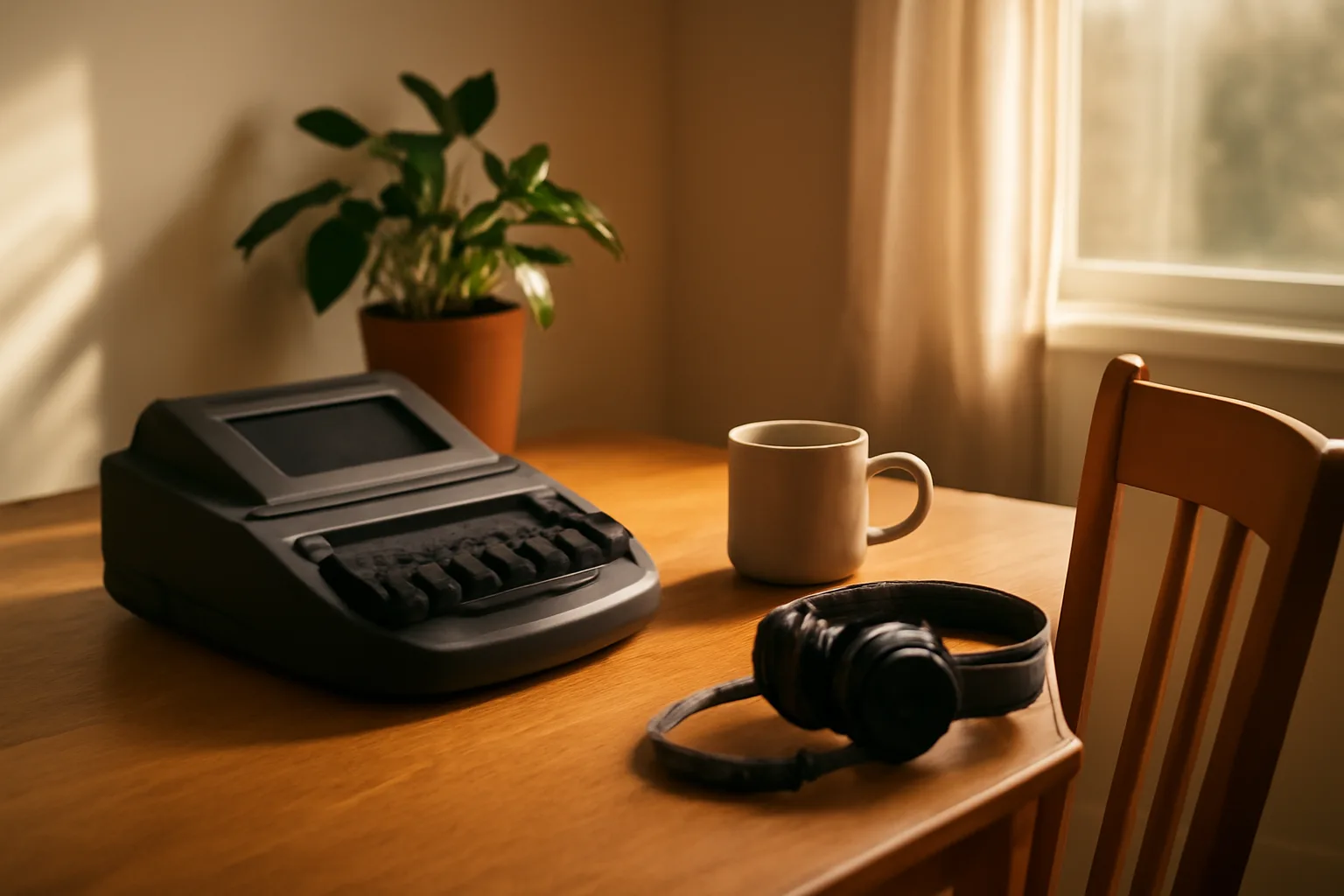
Skip buying a stenotype to "look official." You are not writing on it. A reliable computer, quiet hands, and the software the reporter already runs will get you further than hardware theater.
NCRA's Registered Professional Reporter credential is a reporter exam path, not a scopist license. [6] Court reporting programs sit in federal CIP code 22.0303 (Court Reporting and Captioning/Court Reporter). [7] You can attend one of those programs if you want both skills. You do not have to. Plenty of working scopists never took steno speed tests.
The honest bottleneck is trust. Reporters hand you uncertified testimony. If you leak a file, you are done. If you rewrite meaning, you are done. Start smaller than your ego wants. One clean job beats a website full of badges.
Do you need a license to work as a scopist?
Usually no. Court reporters are licensed or certified in many states. Scopists generally are not, because they do not take the live record and they do not certify the transcript. You still cannot hold yourself out as a certified shorthand reporter if you are not one.
California is the clean example. Business and Professions Code section 8017 says: "No person shall engage in the practice of shorthand reporting, as defined in Section 8016, unless that person is the holder of a certificate in full force and effect issued by the board." [4] That statute regulates shorthand reporting. Editing a reporter's file is not the same act as practicing shorthand reporting. Do not blur the two in your bio.
Texas occupies the same idea from the official-reporter side. Occupations Code Chapter 154 sets certification rules for shorthand reporters, and the Judicial Branch Certification Commission runs the court reporter certification program. [5] [12] Appointment as an official or deputy court reporter is a certified-reporter problem. It is not a scopist job posting.
If a state board thinks you are practicing reporting, that is a real problem. Do not sign a transcript. Do not use CSR, RPR, CCR, or "official court reporter" if you did not earn those. Do not advertise "licensed scopist" in a state that does not issue that license. Confirm with the board that actually regulates reporters where you work or where the case sits.
For a state-level walkthrough of what the paper actually looks like, see scopist license in California and what the Alabama board actually requires. Those pages are about reporter-side boards. That is the point. You are orbiting their rules, not sitting for their exam.
How is a scopist different from a court reporter?
A court reporter takes the live record, often on a stenotype or voice writer, and later certifies that the transcript is accurate. A scopist never takes that record. The reporter remains the person who stands behind the transcript.
O*NET's task list for 27-3092 is reporter work: recording verbatim proceedings using computerized equipment, electronic stenograph machines, or stenomasks. [3] That is not scoping. Scoping is post-translation editing inside the reporter's CAT environment.
NCRA's RPR is built for the reporter path. [6] Schools coded under CIP 22.0303 train reporting and captioning, which can include transcript production, but the federal instructional code is still aimed at the reporter and captioner, not a separate scopist occupation. [7]
| Role | Takes the live record | Typical state credential | Certifies the transcript | Main tool |
|---|---|---|---|---|
| Court reporter | Yes | Often a state CSR/CCR path or NCRA RPR | Yes | Steno or voice + CAT |
| Scopist | No | Usually none | No | CAT editing on the reporter's file |
| Audio transcriber | No | Usually none | No | Audio playback, not CAT dictionaries |
I would not tell a friend that scoping is "court reporting lite." The liability sits in different places. The reporter's name is on the certification. Your name is on a freelance invoice. If you want the title and the oath, go to reporting school and sit the speed tests. If you want production work from home, stay on the scopist side and stop borrowing reporter letters.
Captioning is another cousin, not a synonym. Same BLS bucket. Different clients, different software habits, different error costs on live television. Do not assume a captioning course makes you useful on a medical depo file.
What skills and software does a scopist need?
You need unusually boring English skills and enough CAT fluency to move through a file without breaking the reporter's dictionary. Grammar is the product. Legal and medical vocabulary is how you avoid confident mistakes. Software is how you get paid on time.
Learn Q and A punctuation until it is muscle memory. Learn when a parenthetical is a court reporter parenthetical and when you are inventing stage directions. Learn that "there," "their," and drug names will try to ruin you. Read anatomy lists. Read product liability terms. Read a few civil procedure basics so "voir dire" does not look like a typo.
CAT software is the stack: Case CATalyst, Eclipse, DigitalCAT, and whatever else your reporters already run. You do not pick a winner in the abstract. You match the files you are handed. Student or editor seats exist for some products. Confirm current license terms with the vendor. I would not drop a large software check until a reporter has actually sent you work in that format.
Hardware: a quiet, reliable computer and enough screen space to see transcript and reference at once. Dual monitors help. A $3,000 steno writer does not. Headphones help if you also do audio checks the reporter requests. They are not mandatory for every shop.
Style sheets matter more than motivational courses. Ask the reporter how they handle numbers, exhibits, colloquy, and swear-ins. Then follow that sheet even if your English teacher would have done it another way. The reporter certifies the record. Your taste is not the standard.
If a course promises a national scopist license, walk. If a course gives you supervised files, CAT practice, and ruthless grammar drills, that can be worth money. Mentorship from one working reporter beats a framed certificate from a shop with no statute behind it.
What paper do you file in the first year?
In year one you are usually a self-employed contractor, not a court employee. The paper is boring and it is the real path: business identity, tax ID, written terms, confidentiality, and invoices that match how you are actually paid.
The IRS general rule is blunt: "The general rule is that an individual is an independent contractor if the payer has the right to control or direct only the result of the work and not what will be done and how it will be done." [8] Reporters who send you files and a deadline, then leave the keystrokes to you, are usually treating you as a contractor. If they set your hours, tools, and methods like a staff job, that can look like employment. Read IRS Publication 15-A before you shrug. [11]
Get an EIN if you are operating as a business. The IRS explains how to apply online. [9] Sole proprietors often report on Schedule C. [13] Choose a structure (sole prop, LLC, and so on) using the SBA's business structure guide, then confirm the filing with your state, not with a Facebook thread. [10]
Write a short agreement. Scope of work. Page or hourly unit. Turnaround. Who owns the file. Confidentiality. What happens if the job cancels. Who pays if software eats a job. None of that is glamorous. All of it prevents ugly Friday nights.
Do not invent a state "scopist permit" and send it to a board that does not issue one. If a court or agency asks for a reporter certificate, that request is not for you. Point the client to a licensed reporter. For a ground-level start sequence in one state, how to start as a scopist in Alabama is the kind of walkthrough you want, then repeat the same questions in your own state.
Keep the transcript confidential. These files can hold medical history, trade secrets, and minors' names. Your duty here is contractual and professional even when no scopist license exists. Encrypt at rest if you can. Do not work in a cafe on an uncertified depo. That is not cute.
How do scopists get paid if there is no official rate?
There is no official federal scopist wage and no single national page rate you can treat as law. BLS publishes wages for court reporters and simultaneous captioners, not for scopists. The Occupational Outlook Handbook listed a median annual wage of $63,560 for that reporter-and-captioner occupation in May 2023. [1] That number is real for the BLS bucket. It is not your scoping rate.
You will usually quote per page, per job, or per hour, then put it in writing. Page definitions matter (what counts as a page, condensed pages, ASCII vs formatted). Rush fees matter. Sunday files matter. I would rather be slightly expensive and clear than cheap and resentful. Cheap scopists attract the worst files and the slowest payers.
Nobody has a clean public dataset on scopist page rates. Trade chatter moves. Software changes. Agency cuts change. Confirm the number with the reporters you want, on the record of an email, before you touch the file. If a kit or template helps you hold that conversation, use it as a checklist, not as a government fee schedule.
ScopistPath publishes independent paper kits (not a law firm, not a placement agency). The $99 one-time Rate + Agency Kit is a publisher product if you want structured rate and agency language. You still set the number with the reporter. You still confirm board rules where they exist.
Tax side: contractors often receive Form 1099-NEC above the IRS reporting threshold then in force. Set aside money for federal and state income tax and self-employment tax as you go. Quarterly estimates exist for a reason. I would not spend the first three jobs on a new desk chair.
Agencies may take a cut. Direct reporter work may pay more and arrive in uneven waves. Pick your mix on purpose. If someone offers "exposure," that is not pay.
Where do scopist jobs actually come from?
They come from working court reporters and from firms that already have reporters. They do not come from a courthouse HR portal labeled "scopist." Courts hire reporters, clerks, and sometimes transcription vendors. You are usually one step off that payroll.
Ask reporters who are busy. Depo-heavy freelancers. Small firms. People returning from a long trial with a pile of roughs. Offer a paid sample on a non-sensitive file if they have one. Accept a no. Follow up once. Then do the work so well they forward your name.
State associations and NCRA events are reporter rooms. You are a vendor in those rooms. Behave like one. Do not pitch during a memorial. Do not scrape a membership directory into a spam blast.
Agencies exist. Some are fair. Some treat scopists as interchangeable cheap pages. Read the independent contractor terms. If they want employee control at contractor pay, that is a smell. IRS contractor guidance is the reference, not the agency's vibe. [8]
Geographic branding is optional. Files move. A reporter in Phoenix can send work to someone in Boise. Local knowledge still helps on captioning of place names, judges, and law firms. If you want a state-flavored start map, how to start as a scopist in California, how to start as a scopist in Alaska, and how to start as a scopist in Colorado show how the same job sits next to different reporter boards.
Do not cold-email judges. Do not promise faster official transcripts than the reporter can certify. You cannot outrun the person who owns the notes.
What training is real when there is no scopist board?
Real training is supervised editing of real CAT files, plus grammar you can defend. Fake training is a certificate with a gold seal and no statute, no speed test, and no reporter who will admit they taught you.
Court reporting programs (CIP 22.0303) can put you next to transcripts, medical dictation, and CAT labs. [7] That is useful even if you never sit an RPR. Community college programs vary. Read the catalog. If the program only teaches steno theory and never lets you touch a finished transcript, it is a weak scopist path.
Self-study works if you are harsh with yourself. Buy or borrow transcript examples. Build a personal error list. Time yourself. Compare your punctuation to published transcripts, not to social media snippets. Find one working reporter who will mark up a sample. Pay them for that time if you have to. Free advice is often free because it is vague.
NCRA RPR prep is reporter prep. [6] It will make you better at the record. It will not magically place scoping files in your inbox. Voice writing and electronic reporting have their own associations and credentials. Those are still not scopist licenses. Do not collect letters that imply you certify transcripts.
I would spend money in this order: CAT access that matches real files, a good grammar reference you will actually use, a medical word source, then maybe a short course with marked homework. I would not spend money on embroidered logos, "board eligible" language, or a new business entity in two states before you have been paid once.
On-the-job training for the BLS reporter occupation is listed as short-term in the Handbook's quick facts framing, with a typical entry education of a postsecondary nondegree award. [1] That is the reporter pipeline. Your pipeline is shorter and less official. Treat that as freedom and as risk.
How do state rules change the work?
State rules change the reporter sitting next to you, the words you cannot put on a website, and sometimes who may deliver an official transcript. They rarely create a scopist exam. Your job is to stay on the editor side of that line in every state you touch.
California's Court Reporters Board publishes applicant material for certified shorthand reporters, which is a reporter process. [4] Texas runs reporter certification through Chapter 154 and the Judicial Branch Certification Commission program page. [5] [12] Other states have weaker or different schemes. Some official work is county or court-employee based. Freelance deposition practice is a different market than an officialship.
If you live in Alabama, start with how to start as a scopist in Alabama and the Alabama cost breakdown rather than importing California folklore. If Arizona is the reporter's home, read scopist license in Arizona as a reporter-board check, not as a promise that Arizona mails scopist cards.
Remote work does not erase the case venue. A New York medical malpractice depo is still that case even if you edit it from another time zone. Follow the reporter's instructions on caption format, reporter notes, and who may see the rough. When a rule is unclear, the reporter asks their board. You do not freelance a legal opinion.
ScopistPath is an independent publisher. We are not your board. Confirm fees, titles, and any registration with the agency that actually charters reporters in that state. No article can freeze a fee table. Boards change forms.
What first-year mistakes waste money?
Buying a stenotype you will not write on. Paying for a private "national scopist certification" that no court recognizes. Incorporating in two states before you have an invoice. Quoting a page rate you copied from a 2011 forum post. Working without a confidentiality term. Signing something that looks like you certified the record.
The last one is the career-ending mistake. You did not take the record. Do not dress like you did.
Underpricing looks like a marketing plan and behaves like a trap. Low rates attract dumped files, poor dictionaries, and people who pay in 90 days. Raise the rate or decline the work. You can say no in one sentence.
Overbuying software seats for every CAT brand is another leak. Match the first two reporters, then expand. Student licenses, editor licenses, and reporter-provided access beat a full professional stack you never open.
Treating BLS reporter wages as proof you will earn $63,560 scoping from the spare room is a math error. [1] That median is for SOC 27-3092, a mixed reporter and captioner series. [2] Your income is pages times rate times how often you are actually sent work.
Skipping tax paper is quieter and worse. An EIN, a bank account that is not your rent account, and a Schedule C habit will save you a winter. [9] [13] I would rather you look uncool in January than surprised in April.
A website is optional. A clear email, a sample, and a turnaround you keep are not.
Should you become a court reporter instead?
If you can tolerate steno or voice-writing speed work, and you want the credential that actually exists, become a reporter. The license, the oath, and the certification of the record sit there. BLS still frames that occupation around postsecondary nondegree awards and slow growth, with a May 2023 median wage of $63,560 for reporters and captioners. [1] Read the live Handbook table before you build a household budget on it. BLS revises the figure.
If you want home production, you like English more than a machine, and you can live with feast-and-famine contractor work, stay a scopist. The ceiling is usually lower. The entry is faster. The politics are simpler as long as you do not pretend to be the reporter.
Some people scope while they are in reporting school. That can work. It can also stall your speed building because editing feels productive. Be honest about which career you are actually in this quarter.
Official federal court reporting is its own labor market with judiciary policy on top. Do not assume a depo scoping habit transfers into a federal officialship. It does not.
My bias: start scoping if you need paid work this year and you already write clean English. Start reporting school if you want a board-confirmable title and you can give the machine a few hard years. Do not do both at 30 percent effort.
If you want a one-time Rate + Agency Kit after you have read the board pages, ScopistPath sells that for $99 at /start. It is a publisher kit. It is not a license, not legal advice, and not a placement. Confirm every fee and every restricted title with the relevant board.
Frequently asked questions
What is scopist?
A scopist is a transcript editor who cleans a court reporter's rough CAT file (grammar, punctuation, speakers, consistency) so the reporter can proof and certify the record. You do not take the live proceeding or sign the transcript. It is production work next to court reporting, not a separate federal occupation with its own BLS wage series.
How do you start scopist?
Build editing skill and CAT fluency, paper yourself as a contractor (EIN, written terms, confidentiality), then get paid files from working reporters. There is no national scopist license. Skip fake certificates. Confirm any local reporter-board rule before you use letters like CSR or RPR that you did not earn.
Do scopists need a state license?
Usually no. Many states license or certify court reporters who take and certify the record. California BPC 8017 restricts uncertified shorthand reporting, which is not the same as editing a reporter's file. Do not hold yourself out as a certified reporter. Confirm with the board in the state that matters to the case.
How much does a scopist make?
There is no official scopist wage series. BLS reported a $63,560 median annual wage for court reporters and simultaneous captioners in May 2023, which is a related occupation, not scoping. Scopists usually quote per page, per job, or hourly. Confirm the unit and rush terms in writing with each reporter. Nobody has a clean public national rate table.
Is a scopist the same as a legal transcriptionist?
No. A transcriptionist typically types from audio. A scopist usually edits inside CAT software against a stenographic translation and the reporter's dictionary. Some people do both. The tools, error patterns, and who certifies the record are different. If you only work from audio and never touch a CAT file, you are not scoping.
What software do scopists use?
Whatever CAT stack the hiring reporter already runs. Common names in the trade include Case CATalyst, Eclipse, and DigitalCAT. Match the file you are handed. Confirm current editor or student license prices with the vendor. Buying every brand before you have work is a good way to waste money.
Can I become a scopist without court reporting school?
Yes. Court reporting programs (CIP 22.0303) help, and NCRA's RPR path is for reporters, but many scopists learn through grammar drill, CAT practice, and mentored files. School is optional for scoping. It is much closer to required if you want to become the reporter who certifies the record.
Do I need an EIN to freelance as a scopist?
An EIN is the IRS business identification number, and you can apply online using IRS instructions. Many sole proprietors use one so they are not handing reporters a Social Security number on every form. Sole proprietors often report on Schedule C. Choose an entity with your state and the SBA structure guide, then confirm filings locally.
Does NCRA certify scopists?
NCRA's flagship RPR credential is a registered professional reporter certification, not a scopist license. Do not treat RPR, CSR, or CCR letters as something a weekend course can confer. If you want those letters, sit the actual reporter path. Scoping work is separate production support.
Can I work from home as a scopist?
Yes. Most scoping is file-based production. Home is normal. Confidentiality is not optional. Uncertified testimony does not belong on a cafe table. Use a setup you control, follow the reporter's file-handling rules, and remember the case venue still matters even when you never enter the courtroom.
How do I find court reporters who need a scopist?
Ask busy freelance reporters and small firms for a paid test file. State associations are reporter rooms, so behave like a vendor. Agencies exist and take a cut. Do not spam judges or promise official transcript delivery. Trust and turnaround get you the second job. A cold website rarely gets you the first.
Should I form an LLC in my first month?
Not automatically. The SBA explains sole proprietorships, LLCs, and corporations as structure choices with different paper. An EIN and clean books matter earlier than a two-state LLC stack. If you want limited liability or a bank that demands an entity, talk to a local accountant. Confirm state filing rules. Do not buy the entity as a personality upgrade.
What is CAT software?
Computer-aided transcription software is what court reporters use to translate stenographic notes into English and produce a transcript. A scopist edits inside that environment (or from an export) without taking the live notes. Dictionaries, includes, and the reporter's style sheet live there. Audio-only word processors are not the same tool.
How long until I get paid scoping work?
Nobody can promise a date. Skill, CAT match, and one reporter who trusts you decide it. Some people get a test file in weeks. Others stall because they advertised like a licensed reporter or priced from old gossip. No article can promise approval or a first paycheck. Confirm every local restriction with the relevant board.
Sources
- U.S. BLS Occupational Outlook Handbook, Court Reporters and Simultaneous Captioners: Defines court reporter work as word-for-word transcriptions of legal proceedings and publishes occupation wage, education, and outlook figures, including a May 2023 median annual wage of $63,560 for this SOC.
- U.S. BLS Occupational Employment and Wage Statistics, 27-3092: Federal wage and employment estimates for Court Reporters and Simultaneous Captioners (SOC 27-3092), the closest published occupation series to scoping work.
- O*NET OnLine 27-3092.00 Court Reporters and Simultaneous Captioners: Task statements for the occupation center on recording verbatim proceedings with stenograph machines, stenomasks, or computerized equipment, which is reporter work rather than scoping.
- California Business and Professions Code section 8017: California requires a board-issued certificate in full force to engage in the practice of shorthand reporting as defined in section 8016.
- Texas Occupations Code Chapter 154 (Court Reporters Certification): Texas statute governing certification of shorthand reporters, including restrictions on official and deputy court reporter appointments.
- NCRA Registered Professional Reporter certification page: The Registered Professional Reporter (RPR) is NCRA's reporter certification path, not a scopist license.
- NCES CIP code 22.0303 Court Reporting and Captioning/Court Reporter: Federal Classification of Instructional Programs code 22.0303 identifies postsecondary programs in court reporting and captioning.
- IRS Independent Contractor Defined: IRS general rule that a worker is an independent contractor if the payer controls only the result of the work, not what will be done and how.
- IRS Apply for an Employer Identification Number (EIN) Online: The IRS provides an online application process for an EIN used to identify a business for tax purposes.
- U.S. Small Business Administration, Choose a business structure: SBA guidance on sole proprietorships, LLCs, corporations, and partnerships as first-year structure choices.
- IRS Publication 15-A, Employer's Supplemental Tax Guide: Federal employment tax guide covering employee versus independent contractor status for payers.
- Texas Judicial Branch Certification Commission, Court Reporters Certification: Texas program page for court reporter certification administered by the Judicial Branch Certification Commission.
- IRS About Schedule C (Form 1040), Profit or Loss from Business: Sole proprietors report business profit or loss on Schedule C (Form 1040).